
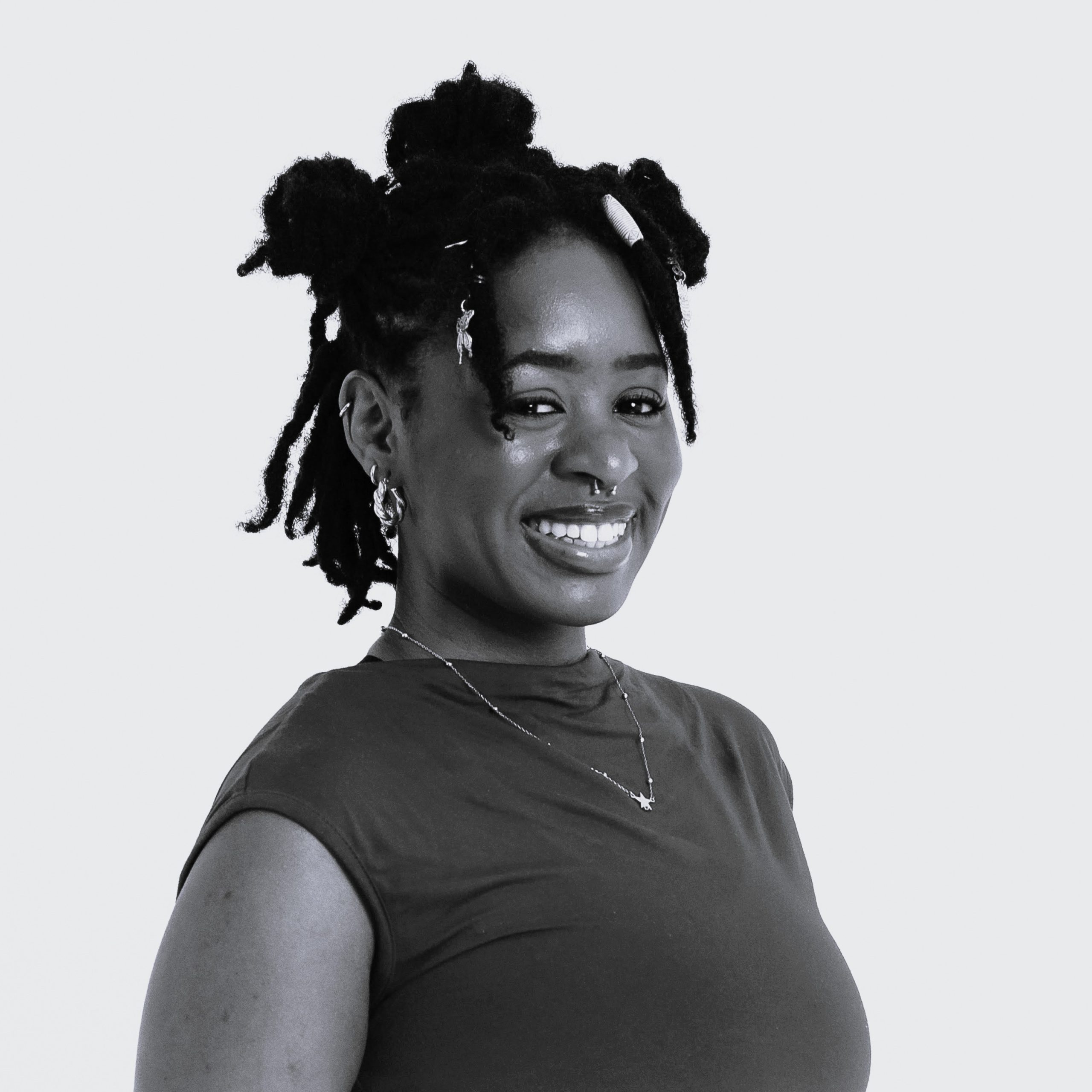
This edition is a story that acknowledges the courage to walk away from what feels safe and build your craft.
Bolaji, a First Class Mechanical Engineering graduate who once worked as an engineer at Heathrow Airport, now spends her days building stages, designing worlds, producing exhibitions, and helping shape the visual identities of artists within the UK underground rap scene.
Through BFIXEDIT, her multidisciplinary practice, she has worked across theatre, music, fashion, architecture, and event production, proving that engineering and creativity are not opposing paths, but complementary ones.
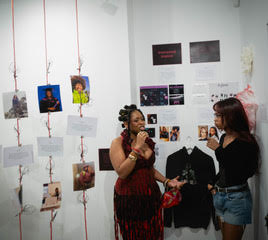
Earlier this year, she presented BFIXEDIT: The Exhibition, a deeply personal exhibition documenting her transition from engineering into set design while encouraging others to embrace their creative ambitions. She is currently pursuing a Master’s degree in Interior Design while preparing Off The Record, an exhibition dedicated to the often-overlooked creatives working behind the scenes of underground music.
For this edition of Creator Spotlight, we spoke with Bolaji about identity, community, creative risk, the underground, and what it truly means to build a life around the work you love.
Q: Let’s start with the basics. What’s your full name, and what do you like to be called?
Mobolaji Babalola. Everyone calls me Bolaji. 😀
Q: Where were you born and raised, and what was growing up like for you?
I was born in Lagos, Nigeria, and moved to the UK when I was around 11. Growing up meant constantly moving between Lagos and London before eventually settling in the UK for secondary school.
I grew up in predominantly white areas and struggled a lot with my identity and finding community. Moving into the city changed my life and ultimately pushed me toward becoming a creative.
Q: You’re currently based in London. How has your environment and creative community influenced your work?
Massively.
I was focused on becoming the best engineer I could be. I studied hard and worked at Heathrow as a graduate engineer, but everything shifted in 2022 when I started attending events organised by queer Black creatives and underground rap shows.
I met young people curating magazines, organising concerts, building communities, and creating incredible work. It inspired me to become a designer and use my engineering background differently.
My community has honestly carried me. People recommend me for jobs, share my work, send opportunities, and that’s how I’ve landed many of my projects.
Q: You’re a First Class graduate in Mechanical Engineering. What initially drew you to engineering?
I’ve always loved solving problems and fixing things.
It started with assembling IKEA furniture, then joining the Air Cadets at 14 where I learned about engines and mechanical structures. I also had a family friend, Clive Kavan, an electrical engineer, who taught me everything from soldering to carpentry.
One day I broke my bedroom door and instead of fixing it, he taught me how to build a new one from scratch. Eventually he told me the only thing he regretted was not going to university, and that’s what pushed me toward engineering.
Q: At what point did creativity begin competing with engineering for your attention?
Honestly, all my life.
I danced as a kid and was heavily involved in drama and theatre. I think I chose engineering because it felt like a creative career that could also pay the bills and support my family.
The real breakthrough came at university when I started Bruzed Ego, my anime merchandise brand. That’s when I realised I wasn’t choosing between engineering and creativity. I could use one to make me better at the other.
Q: What was the pipeline between engineering and becoming a set designer, art director, and artist developer?
After college, while waiting for my residency status, I couldn’t go to university for two years, so I enrolled at Questors, a local community theatre.
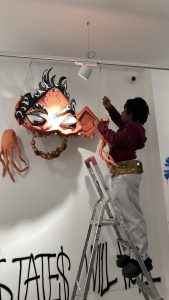
I was asked to help backstage, whether with costumes, lighting, or art. I chose the art department because they needed builders and I already had carpentry experience.
Another volunteer introduced me to set design and I completely fell in love with it.
Over time I worked across theatre, fashion editorials and music videos. As I shared my process online, people stopped hiring me simply to build. They wanted my creative input from the very beginning. That’s how I naturally transitioned into art direction.
Artist development came much later. Working closely with underground rappers, I realised many talented artists lacked direction around branding, storytelling and long-term vision. Together with my best friend and collaborator Vanessa Enson, we’ve helped several artists build that foundation.
Q: Leaving engineering to freelance full-time is a bold decision. Was there a defining moment?
Honestly… my tenancy agreement was ending. (laughs)
I was living a double life. I’d work 9 to 5 as an engineer, then spend every evening and weekend doing set design, networking, researching and learning.
I was exhausted.
Ironically, I was improving as a designer while my engineering career felt stagnant. When I applied for a design internship at Jones Knowles Ritchie, I realised that whether I got it or not, I had to leave.
Luckily, I got the internship.
I wouldn’t necessarily recommend that approach to everyone, but for me, it was the right decision.
Q: Does your engineering background still influence your work today?
Absolutely.
Engineering taught me how to work in teams, communicate professionally, present ideas, think strategically, and manage projects.
It also gave me practical skills like 3D modelling and building.
I actually think many young creatives underestimate how valuable those workplace skills can be.
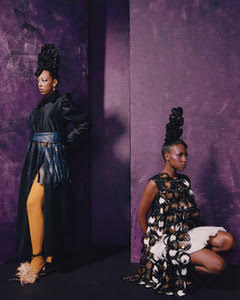
Q: Tell us about BFIXEDIT. How did the name come about?
It would’ve been BFIXES, but I’d already used that name for my wig business years ago. (laughs)
BFIXEDIT is simple.
I’m Bolaji.
I fixed it.
I’m a problem solver. Whatever the issue is, I believe I can find a solution.
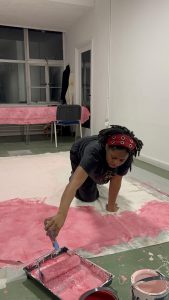
Q: You’ve worked across theatre, fashion, music videos, architecture, exhibitions and event production. What excites you most about building spaces?
I love seeing the potential in a space.
The entire process fascinates me, from the brief and research to moodboarding, designing and finally building.
Being a theatre kid also meant watching the same stage transform into completely different worlds over and over again.
As someone who attends a lot of events, I also understand what audiences want to experience.
Q: How would you describe what you do to someone discovering your work for the first time?
That’s actually difficult because I’m genuinely multidisciplinary.
But I’d probably describe myself as an Art Director and Creative Producer.
Q: What’s been the most fulfilling project you’ve worked on so far?
I don’t really have one favourite.
The projects I love most are the ones where I get to collaborate with my community, especially Black women.
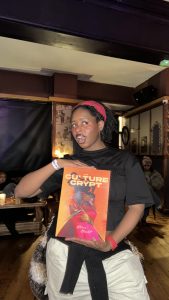
The Culture Crypt cover with Shae Universe and the Extravagance editorial photographed by Abdul-Baqqy Oluwakemi stand out because of their colours, storytelling, and the way they celebrate Black women as confident, powerful and beautiful.
Q: Earlier this year, you presented BFIXEDIT: The Exhibition. What inspired it?
I originally wanted to improve as a designer, which is why I started my Master’s in Interior Design.
One of my lecturers encouraged me to stage an exhibition of my work.
After speaking with my best friend Vanessa, I realised it shouldn’t just be about me.
It became a story about moving from STEM into creativity, the importance of community, and the messy reality behind becoming a set designer.
I wanted people to ask themselves questions like:
“Can I pursue creativity even if I work in STEM?”
“Should I start by working with the people around me instead of chasing big names?”
More than anything, I wanted creatives to leave inspired, collaborate with one another, and feel proud saying, “I create for a living.”
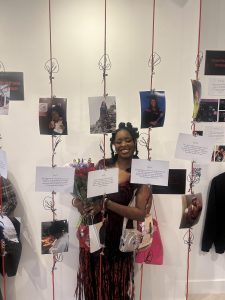
Q: Your next exhibition, Off The Record, focuses on creatives behind underground rap. Why was it important to tell their stories?
While producing shows, I realised artists receive most of the recognition, but there’s an entire ecosystem of designers, photographers, managers, journalists, videographers and builders who make those moments possible.
After my first exhibition sold out with more than 50 people on the waiting list, I realised people genuinely wanted to understand these careers.
Off The Record is about giving those creatives the recognition they deserve while creating another space for people to connect, learn and share their journeys.
Q: What does “the underground” mean to you?
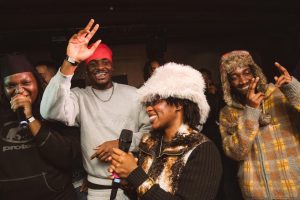
The underground is a space where people take risks.
Mainstream culture often has to appeal to everyone, but the underground is driven by self-expression.
It’s where people experiment, find their communities and build things together, often with support from close friends, family and the people who genuinely believe in the work.
Q: How connected do you feel to the Nigerian underground today?
Honestly, not as much as I’d like.
I’ve met amazing people over the years and my mum has introduced me to creatives back home, but I want to experience the community for myself.
My work is heavily influenced by Nigeria, so it only feels right that it eventually reaches the people it’s inspired by.
I’m planning to spend much more time in Nigeria after my Master’s.
Q: Which underground artists and creatives have caught your attention recently?
I’ve been loving N4T’s GHANAMUSTGO and everything Solana has been putting out.
Creatively, I really admire Lavinia’s work. It’s bold, colourful and always explores identity, belonging and girlhood in such a beautiful way.
Q: Are there any creatives you’d love to collaborate with?
So many.
I’d love to work with Theodora because of how fearless her visual language is, and Rachel Ojuromi whose styling and creative direction constantly push boundaries.
Q: Community seems central to everything you do. Why is it so important?
Without community, I wouldn’t have become a set designer.
They’re the people who encouraged me to pursue this professionally, referred me for jobs, gave me advice and constantly supported my work.
For a year and a half, I didn’t have to pitch for projects because my community kept recommending me.
Growing up Nigerian also taught me what community should look like. Looking after each other, sharing resources, helping without expecting anything back.
In a world driven by individualism, I think we need that spirit now more than ever.
Q: What advice would you give creatives who are still figuring things out?
This comes from a place of privilege, but if you truly want it, don’t stop working.
I’ve done countless unpaid jobs to get here, and even now I still worry about paying bills.
But I know I’m becoming better every day.
Profit will come.
What matters first is skill, consistency and relationships.
Study. Research. Practice.
Never stop creating.
Q: What does the future of BFIXEDIT look like?
It’s expansive.
I want a studio.
I want to run workshops teaching carpentry, painting and financial literacy.
I want to build more stages, more exhibitions and continue helping shape the visual identity of underground artists.
Most importantly, I want BFIXEDIT to become a place where people realize creativity isn’t just something you admire. It’s something you can build a life around.
Q: How would you describe your creative aesthetic in three words?
Imperfect. Colourful. Narrative-driven.
Q: What’s one creative tool you can’t imagine working without?
Canva.
I literally use it for everything, from graphic design to video editing. Even my website is hosted on Canva.
They honestly need to make me a Canva ambassador at this point.
Q: What’s one piece of advice that’s stayed with you?
My mum always says:
“What is worth doing at all is worth doing well.”
Never half-do anything.
You never know where one project might take you.
Q: Finally, what do you hope people remember when they come across your work?
I hope they remember someone who cared.
Someone who cared about art, about people, and about the work.
Someone who was intentional, hardworking and diligent because they genuinely cared.

well done !
your Talent is appreciated 👍
keep up the good work and never get distracted………
Always your word, FOCUS
more wins and growth👍