We have reached an age in the music industry where producers are finally getting the recognition they deserve. Once existing largely in the shadows, producers now get their due credits, from royalties to accolades. It’s even lovelier to see this ripple down into the underground scene.
Elemen3 is one of the producers helping shape that shift, building a distinct hip hop sound while pushing the envelope of what Nigerian underground music can sound like. In this conversation, we talk about his journey into production, his creative process, Gary Gary, his kinship with Zaylevelten, and the underground scene he is helping build.

Q: What’s your real name?
My name is Oluwatofunmi. That’s my government name.
Q: How did you come about the name Elemen3?
There was no big story. I was just on my bed and I needed a name. I was thinking through different names and then I got to Elemen3. That was the one I was resonating with the most.
Q: How would you describe your early days in music production? Where did it all start?
I guess it started in my bedroom. I just really wanted to make music, so I started from somewhere. I used to record one of my friends, then I started making beats on FL Studio and I’ve just been on that for a while.
I started using FL around 2017, but I would say I started really making beats properly in 2020. That’s when I started making beats for real.
Q: Do you play any instruments?
Not professionally. I can do a little bit of some things, but I don’t think I’m qualified to play any instrument properly.
I was learning the trumpet for a while in secondary school, but I didn’t really resonate with it. I can play a bit of the piano, saxophone, recorder, flutes, drums and obviously percussion. Just little bits of things.
Q: What was education like for you?
My highest education is university, funny enough. People don’t always think it, but I was pretty good at school. I have a first-class degree in Information Technology.
I went to Middlesex University. It’s a British school, but I went to the campus in Dubai. I might do my master’s if I find a reason to.
Q: What made you get into music production?
It was a mixture of things. My brother is an engineer, a mix engineer and a producer, so I kind of always had access to that.
When I consciously decided I wanted to start making music, I believe it was around 2015. I found Days Before Rodeo, the Travis Scott mixtape, and just dove into that. From there, I found Metro Boomin, Southside, and went down the whole rabbit hole. It just kept evolving and evolving.
Q: What do you do aside from producing?
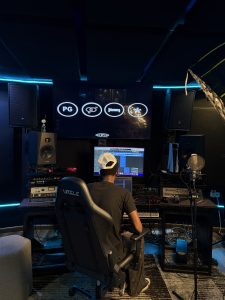
I used to work a job, like an office job, up until around this time last year. Aside from production, I’m building a production collective. I also do A&R work, or I’m building that too.
Aside from that, I play a lot of sports. I swim, play football and basketball.
Q: How would you describe the type of beats you make? What genre would you classify your sound as?
I’ll classify it as hip hop. Straight up. That’s what it is.
My sound, I’d say, is engaging, dark to an extent, especially in the melodies, a little bit experimental, and thoughtful.
Q: Do you make other genres or styles of beats?
I make music here and there, but my go-to way of expressing myself is always going to be hip hop.
In my earlier days, I used to make a lot of indie music and boom bap. I used to work with Aussie Maze a lot. But aside from hip hop, if I’m making anything, it’s going to be hip hop adjacent. So if I’m making R&B, it’ll be R&B with hip hop. If I’m making Afrobeats, it would be Afrobeats with a hip hop leaning style. It’s just what I do.
Q: There was a point where the stuff you were making probably sounded strange compared to what was normal to the average Nigerian music listener. When did you realise that the weirdness was actually becoming your advantage?
I think that’s still kind of the reality. Aside from the Western, European and American influence, I was also influenced by a lot of earlier Afrobeats. A lot of earlier Afrobeats was very hip hop influenced. Very early Don Jazzy, D’Banj, all those kinds of heavy synths. Even early Sarz had heavy synths, fast drums, gritty drums. That’s what I grew up on.
I always knew there was a space to exploit in the Nigerian hip hop scene. It just felt like people would rap for a bit and then, when they started getting recognition, they would try to go into a mainstream sound, which I don’t fault. But it was like, this is what my friends like, this is what people around me like, this is what we play when we’re together. So this is what I was making.
Fortunately, I found someone who shared that vision, and then I found more people who shared that vision. It kept me going because I knew I wasn’t the only one who saw that this was possible.
I just knew that if we kept pushing this thing, eventually it would make sense and Nigerians would understand that, as an artist or producer, you can actually go up, blow up, have a solid fanbase and build wealth off this sound.
Even if it didn’t work then, I still would have been making the same thing.
Q: You’re one of Zaylevelten’s go-to producers. How did that relationship come about?
Nothing really crazy. I think we connected off X or Twitter. Then we did a few songs, linked up and just kept going from there.
Q: Do you think Zay’s music would sound completely different without Elemen3, or do you think you two would have eventually arrived at a similar sound regardless?
I don’t know. When I met him, he didn’t really have any songs out, so for sure, I don’t know.
I think I just really liked what he was rapping about. I heard some songs on SoundCloud and he was just rapping about life, doubts and ambition. He was rapping real. He was rapping from his heart. And obviously, his voice was very unique.
He was making rap, so I was like, okay, I make rap beats. You’re a rapper, let’s work.
I think majorly, he just matched my work rate and also pushed me to work harder. We’ve worked a lot for years, so I guess it’s okay to say that I would have influenced his music and likewise, the other way around.
But I don’t know if I can say it would not be the same without Elemen3. People always reach where they’re going to eventually, with you or not.
Q: With your recent work on “Super Mega,” what was the process behind the song like?
Super Mega, man, that’s one of my babies. I made that beat just on some, “Let me cook up before I sleep.” Nothing too crazy.
Then we had gone to Abuja for his show. The day before, he had picked out some beats and recorded one. After the show, he went to sleep immediately, and I was up. I went to sleep and woke up and he was making the song. I was in and out of sleep, so I was just hearing bits of the song. When I woke up, he had finished it.
I think it was just a song nobody really thought too much about. Everybody was just on their normal. But he sent it to me and I just kept playing it, playing it, and then it just became what it became.
That’s just the process. We make songs.
Q: At what point did you realise you weren’t just producing songs anymore, but actually helping shape the sound of a scene?
At the end of the day, I’m just making beats, regardless. But sometimes when I’m making them, I think, okay, with this kind of beat, every time I’m making one, it’s an opportunity to make something that’s never been heard before.
Why would I leave that to make something that has been done countless times and beaten to the ground? I prefer to make stuff that I know I’ve never made before. I don’t even like making the same kind of beats over and over again.
It might sound the same, but when you actually dig into it, there’s a different vibe or nuance that has been added. Comparing something like “Para Boy” to “Super Mega,” you can obviously tell there’s a difference in the intention.
At the back of my mind, I know that what we’re doing is pushing the envelope in some kind of way. I guess that was always the plan. It’s always kind of been like that, from “before it got crazy”
It’s just like, how can we push this thing to different heights? Not just for me, but for the people beside me, behind me, even people in front of me career-wise. Just something they can listen to and that can spark creativity.
Q: Do you think the scene has become more accepting of unconventional production because producers like you proved that you could actually build an audience around something different?
In terms of the underground scene, I’d say 100%. It’s even required in a way that you’re bringing something new. If you’re doing something that people like Zay or somebody else has already done, people just look at you like, “I’ve heard this.”
But on a bigger scale, I feel like Nigerians will always be Nigerians in the sense that they love familiarity. They love what is familiar.
So you kind of have to, if you’re trying to be different, be different. For me, I’m not really trying to be different. I’m trying to express myself, but also make it make sense.
I think with Nigerians, you just have to give them that little familiar feeling, but also put your own spin on things.
Q: What’s one artist you’d like to hear on your beat?
In Nigeria, I’d like to do something with Prettyboy D-O. I feel like we can find a good balance in creativity and energy.
Global-wise, I’d say Lancey. And then, for the culture, I’d say Yeat.
Q: What does “the underground” mean to you?
I’d like it to be a space where artists can be themselves without the pressure of doing crazy numbers. Where they can experiment, build a fanbase, be heard, learn, and generally live their lives without the pressure of always having to follow a certain process.
The underground should be a space where, okay, I just made this song on my laptop 30 minutes ago. I love it so much, I can send it to a group chat with my friends and somebody can add to it. Then in a week or two, that song is finished and it’s out.
Maybe at the next show, I can perform it and see how the crowd reacts. If they don’t like it, I know I can try something else. If they love it, I know I should do more of this and build on that.
So, yeah, just a pipeline where artists can really develop and show what Nigeria has to offer outside, or even including, Afrobeats.
Q: Who are your top five breakout artists in the underground scene recently?
I’ll say Scotty. I feel like Zay kind of pushed the underground to where it is, so I wouldn’t call him a breakout artist. Maybe a breakthrough artist.
So I’d say Scotty, Indi, Renzo, Zen Universe and Danpapa.
Q: Who are five people you think we should be looking out for right now? Who should people check out and expect big things from?
Bigg Bobbyy, 1 Drag, Majesty Lenbang, Bazen and TooColdBaby.
Q: How are you feeling about where you are right now, both creatively and personally?
I just try to be grateful for everything because this time last year, I was in a whole different headspace, trying to jump from one thing to another, doubting and stuff like that.
I guess I’ve not really regretted my decision, so I’m grateful for that. But generally, I don’t really go too high or too low. I just try and keep a level head.
I’m happy. I’m happy for my friends and my colleagues. I’m happy for myself. I’m happy that I’m healthy. I’m happy that I’m even at the level where Greencamp wants to interview me.
I guess I’ll say I’m grateful.
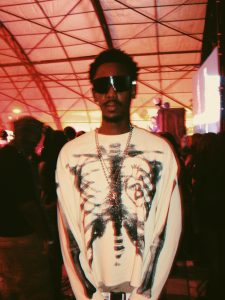
Q: Who is Gary? Or what does Gary represent to you?
Gary is my producer collective. It’s about expansion, collaboration, inclusivity, and helping producers and artists. It’s about building artists and building worlds.
It’s me, Slushyy, Sauth, YJ and Stopher, at least for now.
When I say founded, it was founded around 2021. It was me and Sauth. We were just together in the house, cooking up. As things progressed, I added Slushyy. Slushyy did a lot of the earlier work, even some of the ones that got removed. Me and Slushyy did a lot of stuff for Zay. Then Stopher joined along the line, and then YJ.
They’re just people I feel are like-minded. I feel like we’re generational producers and artists who are capable of breaking rules and boundaries.
Q: Would you say producing is paying the bills for you now?
I’ll say yes, but I also don’t have a lot of bills.
So, yeah, you can say it’s funding the lifestyle.