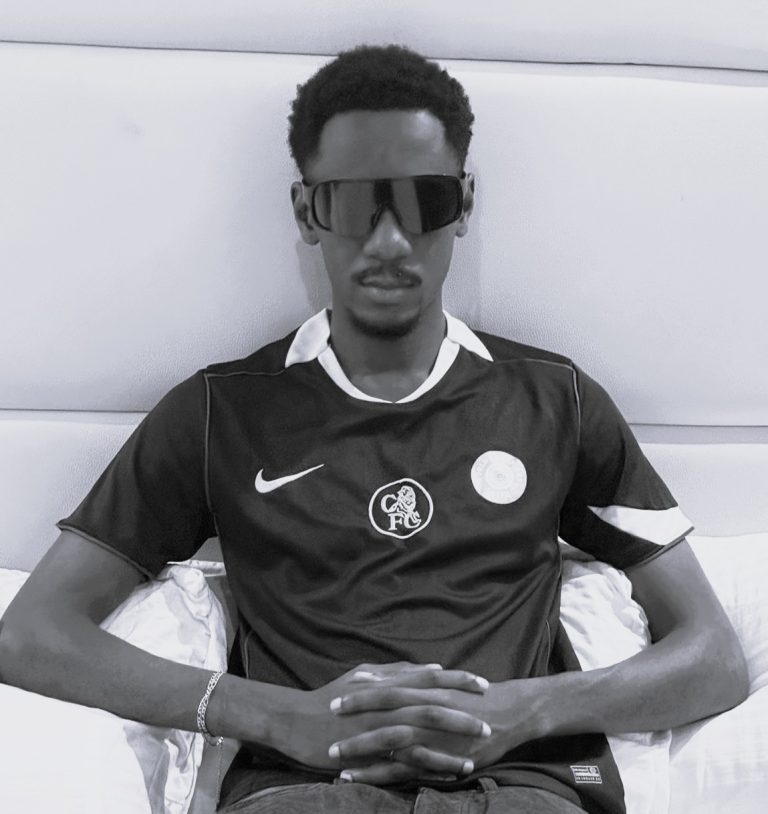
When I first saw FāëM perform at Mainland House x Monkey Studio’s See The Sound, it was also my first time raving, I didn’t know what to expect, but I left changed. Their set was hypnotic… transportive in a way I hadn’t experienced before. I stood there speechless, trying to process what had just happened. It was the kind of experience you go home with and share with everyone you know.
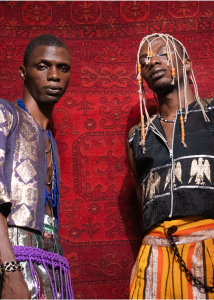
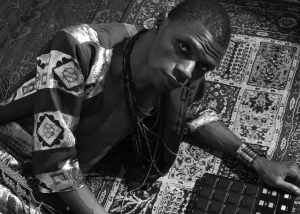
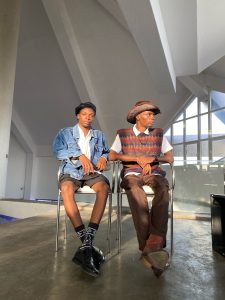
That night sent me down a rabbit hole. I went straight to SoundCloud, replaying their mixes, trying to relive the high of experiencing their sound in real time. But it wasn’t just the music. Their presence was just as striking, scarves draped over their heads and necks, Pan-African symbols painted around one eye. They felt less like DJs and more like ethereal beings, briefly visiting our world to deliver something otherworldly.
So when the opportunity came to sit down with the brothers behind FāëM, it felt like a full-circle moment. I know this sounds like a lot of glazing but they were genuinely that mesmerizing. Anyway, let’s get into the interview. Please note that this is a condensed version of a much longer conversation, because trust me, the talk was plenty.
This conversation continues our Creator Spotlight series, a space where we document creatives before the world catches up, while the work is still raw, independent and very personal. For our first edition this year, we are more than pleased to unravel the mystery that is FāëM.
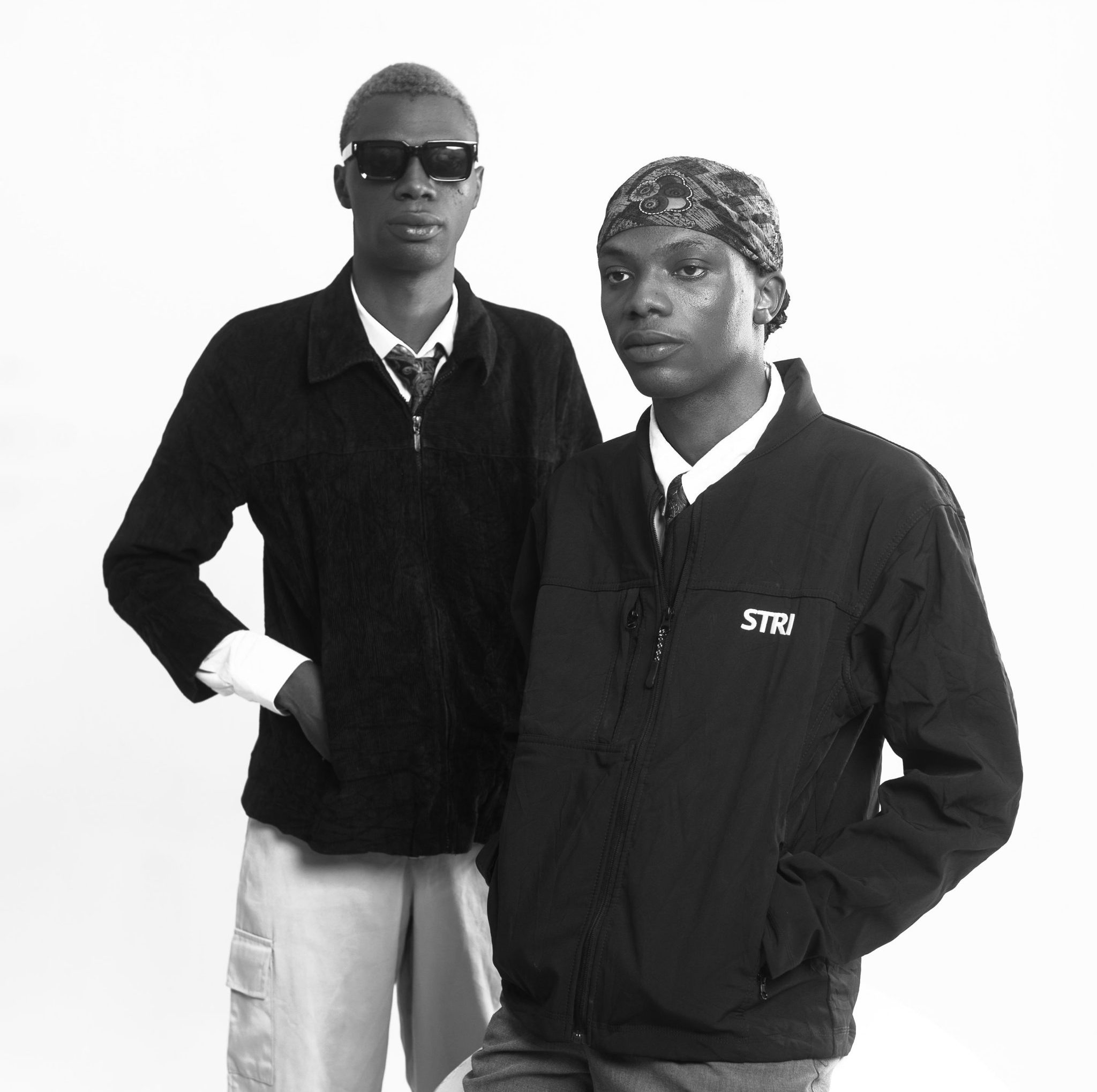
Before getting into the questions, I confirmed that both of them were on the call and asked them to distinguish themselves with their individual names. That’s when we met Demilade and Fapelo, a name formed from three of his names: Favor, Pelumi, and Olaleye.
Why did I assume they were twin brothers and prepare questions specifically for twins?
Zac: Who is the Taiye? Who is the Kehinde?
Demi: Wait, do you think we are twins? Oh my gosh.
Demi: No, we’re just brothers. We are not twins. Haha.
Demi: Like everyone thinks that, it’s not new.
Fapelo: Yeah, like… so we are brothers. Like I’m the older brother. But like he has a twin, so it’s always a confusing thing… he has a twin sister.
Zac: *silent astonishment*
Demi: Yeah, I’m actually a twin. But like he’s not my twin.
At least they’re brothers, so I wasn’t completely off.

Q: How are you doing? What’s your current headspace entering the new year?
Demi:
I feel very charged and energetic…. We finished the album last year… production, mixing, mastering… and now everything is about release. We don’t have external backing. Everything is coming from us, from our small studio, with help from our community.
Fapelo:
Living together in Lagos is what shaped us into a band. We exist in the same space, in the same energy, and the album feels like exactly where our story is right now. Even though it was finished months ago, we took time to think through how to release it properly, this is our debut, and we wanted the rollout to reflect that intention.
Now it’s back-to-back movement, reconnecting the storyline and building toward the album with purpose.
Q: What was growing up like? Have you always shared the same interests?
Fapelo:
Growing up, we were always friends with our siblings. As the older one, I experienced things earlier, so whenever I found something cool, I shared it. That exchange stayed consistent, as everyone got more freedom, we kept sharing discoveries. We didn’t have identical interests all the time, but the connection stayed constant… and it eventually led us here, making music together.
Proximity mattered. We went to the same schools and later the same university, so being around each other helped maintain that closeness rather than letting distance break it.

Q: Where were you born and raised, and how has that environment shaped you? Any early influences?
Fapelo:
We were born in Ogun State. Our parents were civil servants, so we lived in staff quarters at a federal government college in Odogbolu. Later, our parents were transferred to Osun State, where we spent the rest of our childhood, still in staff quarters. It was a very rural upbringing.
Our family was also deeply religious. Church was where we first experienced music, I was a drummer in church. That exposure gradually expanded, from church music to curiosity about sound beyond what religion allowed. That curiosity eventually led us to house music.
Demi:
It was a very secluded environment. We didn’t have access to much, television was really our window to the outside world. Everyone around us was a child of a teacher or civil servant. We weren’t exposed to city life until much later.
Finding electronic music felt like a door opening. It became escapism, a way out of a very contained reality.
Q: You both studied at OAU. What did you each study?
Demi:
I studied Electrical and Electronics Engineering.
Fapelo:
I studied Architecture.
Q: When did DJing and mixing enter the picture?
While in school, Demi had already found a creative outlet through photography, something their parents encouraged. Fapelo, on the other hand, had not settled into a specific skill yet. In his final year, he came across a DJ controller selling for ₦90,000 and decided to test his parents by asking them to buy it for him. They did.
Demi:
We had always been those guys with a lot of music. We were collecting house and electronic music from as far back as 2012. DJing wasn’t the plan… It was just sharing music. If you wanted strange electronic sounds, we were the plug.
I didn’t even think about DJing until Fapelo bought a controller during his final year. That’s when things became real.
Fapelo:
It started very casually. I got the controller just to experiment and see if DJing was even possible for me. Once we had that tool, everything changed. We started watching tutorials, tutorials turned into practice, and practice turned into actual events.
Q: Everyone knows you as FāëM. Why FāëM? Is the aspiration really fame, or is there more behind the name?
Demi:
The name came from playing around with letters from our names. We weren’t thinking about DJing or fame at the time, we just wanted something weird enough to spark curiosity.
We didn’t get into music to be seen. We just genuinely enjoyed playing music for people.
Fapelo:
FāëM is an anagram of our names. Over time, we got to realize the irony… it sounds like “fame”, we don’t actually want fame. We want the music to travel. The work matters more than our faces.
Q: At what point did DJing stop being a hobby and become serious for you?
Fapelo:
Around 2021. We started a YouTube channel in 2020 to share mixes, and that connected us with house music communities in Lagos. At the time, there wasn’t really money in underground house music, we were just preaching the gospel.
Coming to Lagos made things real. From our first month, we started getting gigs.
Q: How would you describe the FāëM sound in three words?
They didn’t need much time to agree.
FāëM:
Nostalgia. Escapism. Psychedelia.
Q: How do you want people to feel when they leave a FāëM set?
Fapelo:
Contentment. Fulfillment. Like they experienced something complete.
We don’t repeat sets because each one is meant to be a one-off experience, something that can’t be recreated the same way again.
Q: You also produce and make music. Tell us more about that side of your creativity.
Demi:
DJing became limiting. We realized people needed familiar sounds to connect, so we started experimenting with production. To do that properly, we had to learn how to make music ourselves.
We taught ourselves Ableton, watched tutorials and learned through trial and error.
Fapelo:
Learning together made it easier. We were discovering things at the same time, sharing knowledge, and building ideas side by side. Production became a space for experimentation, remixing older songs, blending eras and developing what later became our sound.
Q: Outside of DJing and music, what else do you do?
Fapelo:
I read a lot of fiction and write. I prefer words to visuals. I’m interested in mythology, urban fantasy and world building. I ultimately want to be a novelist.
At this point, Fapelo and I briefly went off on a tangent about books and Nigerian authors, discovering that we both love Chigozie Obioma. I was quite surprised to learn that he hasn’t read The Fishermen, which I described as absolutely traumatizing. In return, he recommended Akata Witch by Nnedi Okorafor.
Demi:
I like cooking, editing videos, and the process of getting things done. I enjoy structure and finishing tasks. A lot of the videos we put out for FāëM are edited by me.
Q: How has working together impacted your relationship as brothers? Did it bring you closer or challenge you in new ways?
Demi:
We’ve learned how to balance each other. Sometimes one person carries more weight, sometimes the other does. Over time, we built an ecosystem that works for us.

Q: Have you ever disagreed creatively, and how do you resolve it?
Fapelo:
We talk. We table our povs and find a midpoint. Sometimes we try both ideas. It’s not that deep, communication is the foundation.
Q: What does raving mean to you, and how important is rave culture to young people right now in Nigeria?
Demi:
Raving is expression… It’s freedom… dressing how you want, being yourself. It’s an outlet beyond music. The music is like the magnet… you get to experience your friends in their truest forms and it’s not as expensive as clubbing.
Fapelo:
Yeah, it’s essentially the same for me. Raving gives people a kind of freedom, the same freedom we aspire to create in our music. It creates space for the creative on stage to share a story, and for the audience to release energy and experience something that has been intentionally crafted for them. That balance between both sides is a really beautiful thing. I’m glad to see it growing in Lagos, because we honestly saw this coming.
Q: What has been your most unforgettable set so far?
FāëM:
There’s a lot, but for last year, Arawa. And maybe that Mainland House x Monkey Studio. Those were moments where the crowd truly connected and the energy felt mutual.
Q: What’s your favorite rave house, collective, or party brand right now?
They laugh before answering, careful not to play favorites.
FāëM:
Arawa
Sweat It Out
Group Therapy
Q: If you could shout out just three DJs in the scene, who would they be?
They pause, laugh and proceed with maximum caution.
FāëM:
Shout out Tito, Kalahari, Momentum
Q: What should we expect from FāëM this year?
Fapelo:
The album, live shows and immersive audio-visual experiences. We’re focused on creating moments… an experience people won’t easily forget. And also more rave sets.
Q: What does longevity look like for FāëM?
FāëM:
Taking our sound beyond borders. Building slowly. Finding the people who truly get it, because when they do, they really do.
As the conversation came to a close, we spent the rest of the call talking about FāëM’s upcoming album. They even gave me the privilege of previewing the music video for MESSIAH COMPLEX with Lunamic, along with the full project and it genuinely felt special. I’d describe the album as a journey, easing you in before slowly building and climaxing into tracks that get you dancing. It’s fire. Please anticipate it.
What stood out most was how natural this moment between FāëM and Greencamp felt, like a quiet alignment of shared values. FāëM spoke openly about creating this project without funding or industry backing, and still choosing to move forward. That reflects exactly what Greencamp represents. A community. A space built by creatives to support creatives before the spotlight catches up to them. Creator Spotlight exists to document artists while the work is still raw, independent and deeply personal. Moments like this aren’t for the buzz, but they’re often the ones people reference in the future.